
For a consumer product company, most support starts after the sale. A customer unboxes a smart thermostat, a stand mixer, or a home gym and gets stuck on setup. Months later they need a replacement filter, a firmware fix, or help with a warranty claim. Some of those owners call years after buying, about a model your team stopped selling long ago.
Many of these customers bought through Amazon, a big-box store, or a dealer, so your support team often has no order record to work from. They have a model number, a serial number, and a frustrated person who wants the product to work. If they can’t get help quickly, the product often goes back to the retailer, and a 1-star review goes up on the listing page.
The knowledge behind all of this tends to be scattered. Setup and troubleshooting steps sit in engineering documents and PDF manuals. Warranty terms vary by country and by where the product was bought.
Support reps, many of them outsourced, search through all of it during the busiest weeks of the year. When product knowledge is accurate, easy to find, and specific to the customer’s model, self-service and AI can handle a large share of these questions.
Below, we break down what consumer product companies need from a knowledge base and six tools built to meet those needs, each with a different strength.
What Consumer Product Companies Need From a Knowledge Base
Consumer product brands manage knowledge for product owners, the support reps who help them, and often for retail partners and repair technicians. How well that knowledge works shows up in return rates, warranty costs, and product ratings as well as support costs.
- Knowledge organized by model and product generation: A brand may support hundreds of models across several generations, each with its own specs, setup steps, and compatible parts. Reps and owners need to land on the details for the exact model in front of them, including older ones that are no longer sold.
- Troubleshooting that follows the product’s logic: Most product questions are diagnostic. The answer depends on the model, the symptom, and what the owner has already tried. Look for content formats and AI that can handle these branching questions without sending everyone to the same long article.
- Warranty and policy content that varies by region and channel: Warranty length, registration requirements, and replacement rules often differ by country and by whether the product came from an authorized retailer. Content should be filterable or personalized to the owner’s situation.
- Exact wording for safety and compliance: Safety warnings, recall notices, battery and electrical guidance, and warranty terms often need approved language. Teams need control over how these answers are delivered, especially by AI.
- Content that keeps up with firmware updates and product launches: Every new model, firmware release, or revised manual makes some content outdated. Teams need a fast way to find and update everything a change affects.
- Support that holds up through post-holiday and launch spikes: Consumer brands feel the peak right after the shopping season, when gifts are unboxed, and again around launches. Self-service has to absorb the setup wave, and seasonal or outsourced reps need to be productive within days.
- Help at setup and inside the companion app: For connected products, the mobile app is part of the product. Help that appears on the support site, in the app, and at the moment of setup keeps simple questions from becoming tickets or returns.
- Knowledge inside the help desk: Reps need product guidance alongside the ticket they’re working on, without switching tabs to search a separate portal.
- Insights that reach product teams: Support data shows which products, features, and setup steps cause the most trouble. A good knowledge base surfaces those patterns for the teams that can fix them.
Very few tools cover all of this well, and many brands use more than one. The tools below are grouped by what each does best.
The Best Knowledge Base Software for Consumer Product Companies at a Glance
- Stonly: Best for high-volume consumer product support teams that want reps to resolve setup, troubleshooting, and warranty tickets faster and more owners to self-serve with personalized knowledge, powerful AI, and process automation
- Salesforce Knowledge: Best for large brands already running customer service on Salesforce Service Cloud
- Freshdesk: Best for small and mid-size consumer brands that want an affordable help desk with a built-in knowledge base
- Kustomer: Best for direct-to-consumer brands that want a single customer timeline across every channel
- Helpshift: Best for connected-product brands that want support inside their companion mobile app
- Document360: Best for brands that need to publish and maintain product manuals and technical documentation
Stonly
Best for: High-volume consumer product support teams that want support reps to resolve tickets quickly and help more owners self-serve with personalized knowledge, powerful AI, and process automation.
Stonly is a knowledge management platform built for customer service. One platform serves support reps, product owners, and AI, so when a model changes, a firmware update ships, or a warranty policy is revised, a single update can reach the help center, the rep’s workspace, and your AI at the same time.
Personalized Knowledge by Model, Region, and Channel
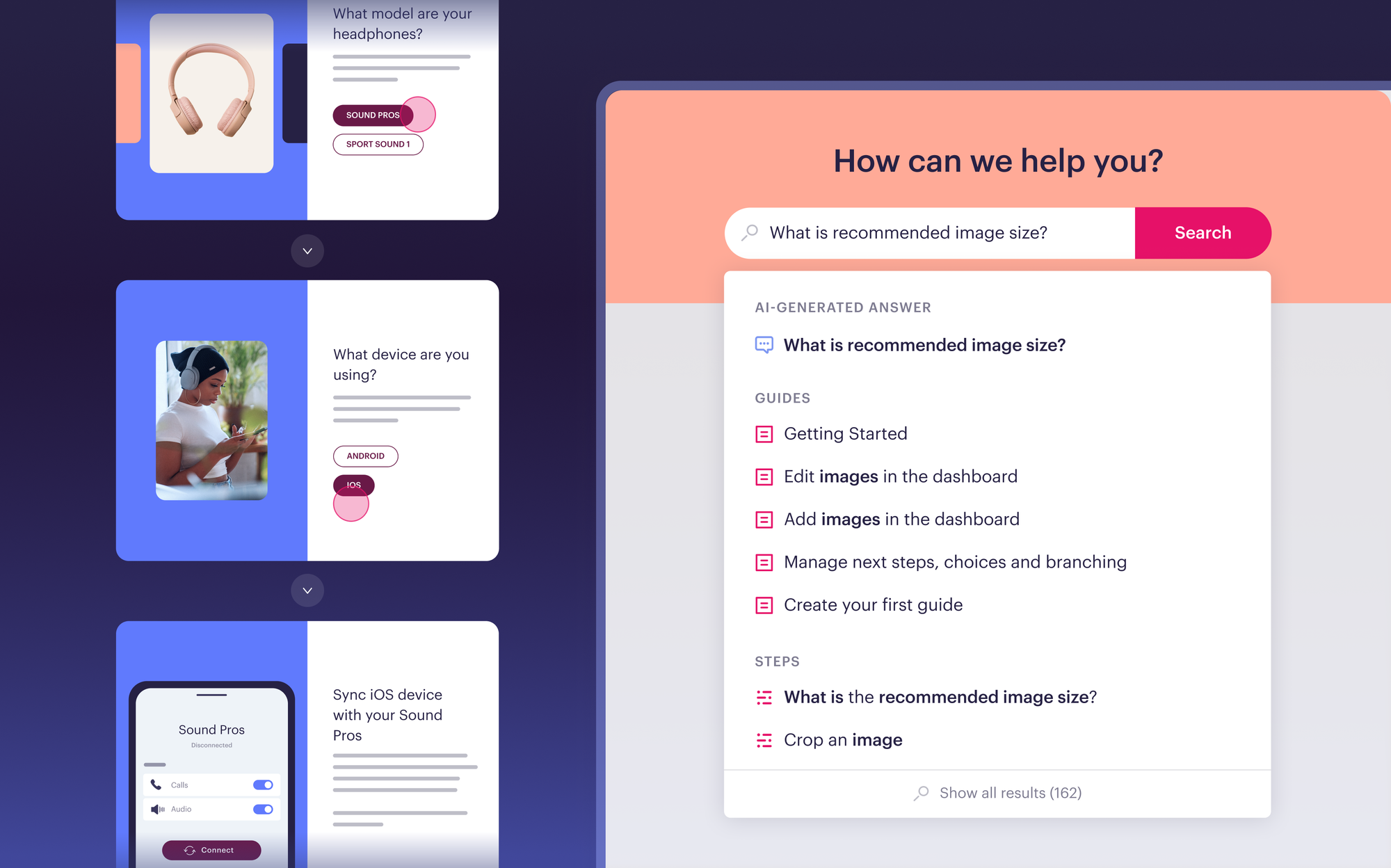
You can personalize individual pieces of content or the entire knowledge base using your customer and product data. An owner with a current-generation model in Germany and an owner with a 2021 model in the US can open the same help center and see the setup steps, compatible parts, and warranty terms that apply to their product.
The same goes for reps. A rep handling a ticket about a specific product line sees the specs, troubleshooting steps, and policies for that line, without scrolling past content for the rest of the catalog. For brands supporting many models across several regions and sales channels, this keeps one knowledge base usable instead of splitting it into dozens of versions.
AI Answers and AI Agent Copilot
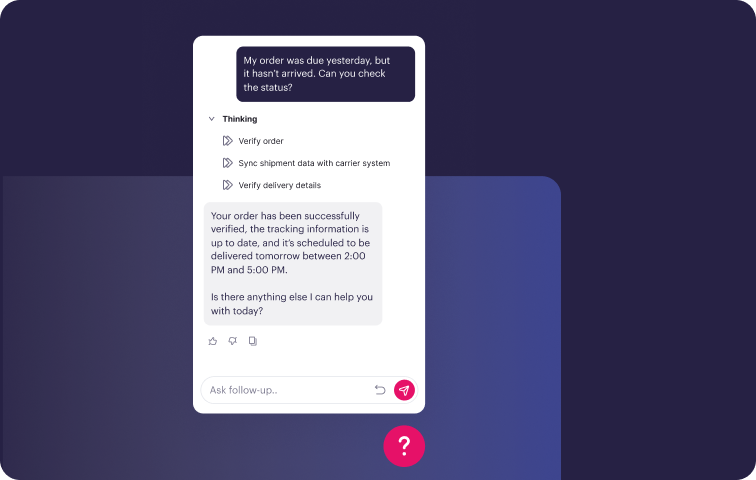
AI Answers gives owners conversational self-service in search or as a standalone chat, and gives reps a way to ask questions in plain language during a conversation without digging through manuals and engineering documents.
Several things make it a fit for consumer product support:
- Accurate answers that link to the source: Stonly’s structured, metadata-rich knowledge gives AI a reliable foundation, and every answer links to the guide or article it came from, so owners can follow the steps themselves.
- Clarifying questions: When more than one answer could apply, such as a pairing problem that works differently on each headphone model, AI asks which model the owner has instead of guessing. It also rephrases vague or misspelled questions automatically.
- Guided Answers for important questions: For situations that need a specific process or word-for-word answer, like safety warnings, recall questions, or warranty claims, the AI follows predetermined help flows and pre-approved answers.
- Business Process Agents (BPAs) for complex resolutions: BPAs gather the details they need, take action in connected systems, and resolve requests like warranty claims, product registrations, or replacement part orders end to end, using the same guides your reps follow.
- Targeted experiences by audience: Run multiple AI agents with their own knowledge sources, tone, and instructions for different product lines, brands, regions, or audiences such as retail partners.
- Smooth handoff to your team: When AI can’t resolve a question, it creates a ticket or opens a live chat with the full context attached, including the model and troubleshooting steps already tried.
- Analytics on every question: Questions are grouped into topic clusters, so you can see what owners ask most, how often AI resolves each topic, and which products or setup steps need better content.
- Answers wherever owners ask: AI Answers works on the web, in mobile apps, and in channels like WhatsApp.
AI Agent Copilot works alongside reps inside the help desk. It suggests relevant guidance based on the ticket and can trigger actions in connected systems.
Both rely on Stonly’s structured knowledge. Most troubleshooting and warranty questions have an “it depends” answer. Each step in a Stonly guide ties its information to a specific condition, so AI can answer these questions more reliably. The same applies if you bring your own AI and feed it Stonly knowledge.
Guidance Inside the Help Desk
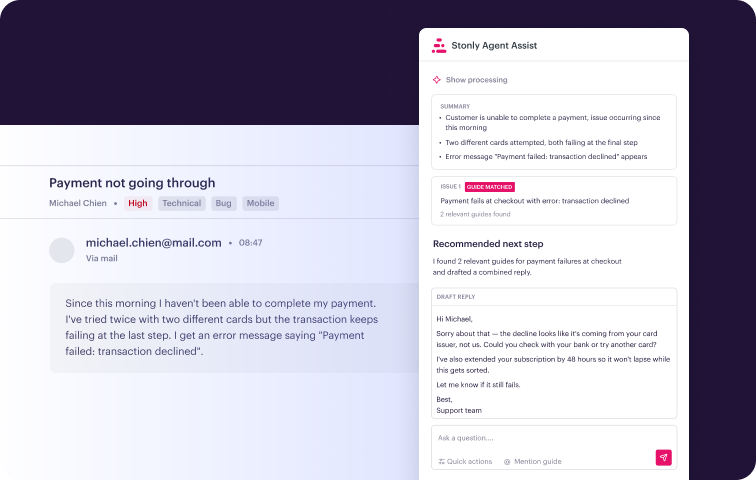
Stonly integrates with Zendesk, Salesforce, Freshworks, ServiceNow, and more. Relevant guidance appears in the ticket view based on ticket context, so reps don’t open another tab to search.
Stonly also connects self-service with assisted support. When an owner who tried a troubleshooting guide still needs help, the ticket arrives with the context of what they already tried, so the rep can skip the basics and move straight to the next step.
Knowledge Agents That Keep Content Current
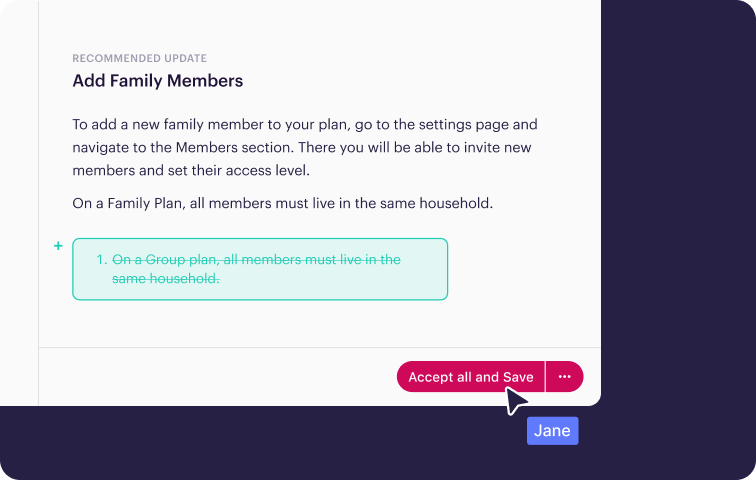
Keeping content accurate through product launches, firmware releases, and revised manuals is one of the hardest parts of product knowledge management, and Knowledge Agents take on much of that work.
They connect to the places where questions and changes come from, including incoming tickets, search results, AI conversations, and product or policy changes. They scan your knowledge continuously for duplicates, mistakes, outdated content, and topics that have no content yet.
When something needs attention, they outline what’s required and draft an update that follows your brand guidelines. Your team reviews and publishes it, so nothing goes live without human approval.
Your team can also ask Knowledge Agents for help directly. Examples for consumer product teams:
- Update every article that references the previous firmware version
- Turn a new product manual into setup and troubleshooting guides
- Add a recall notice to every article about an affected model
- Find articles about models that are no longer supported
- Find content that hasn’t been reviewed in the last six months
Business Process Automation
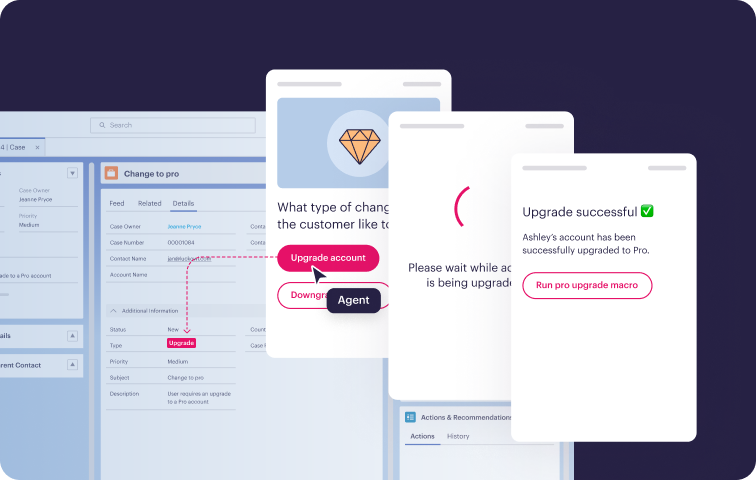
Stonly guides can take actions on behalf of reps and owners. A guide can handle data entry, fill in ticket fields, or run a macro as the rep moves through it, such as logging a serial number or starting a replacement order. Each ticket takes fewer manual steps, and reps can spend their time on the conversations that need them.
Step-by-Step Guides for Setup, Troubleshooting, and Warranty Claims
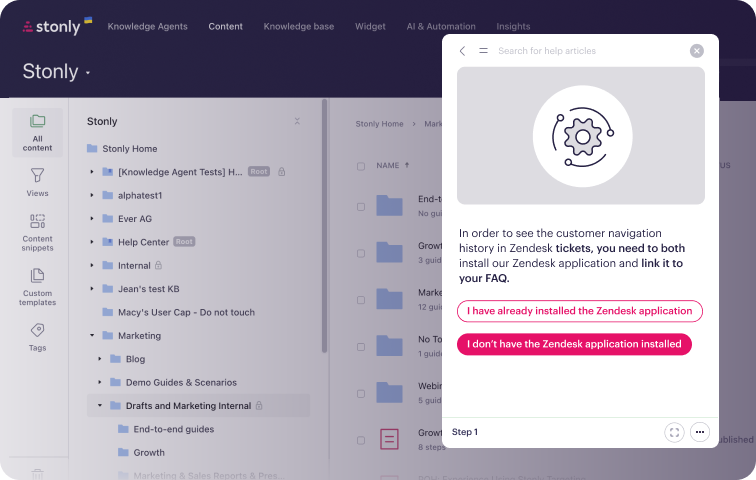
Stonly is the only full-featured knowledge base that offers both standard articles and step-by-step guides. A guide breaks a process into steps, asks what the owner or rep is working with, and shows only the path that applies.
This works well for product setup, diagnostics, maintenance, and warranty claims. A new outsourced rep follows the same path an experienced product specialist would, and an owner can work through the same steps on their own.
Help at Setup and Inside Your App
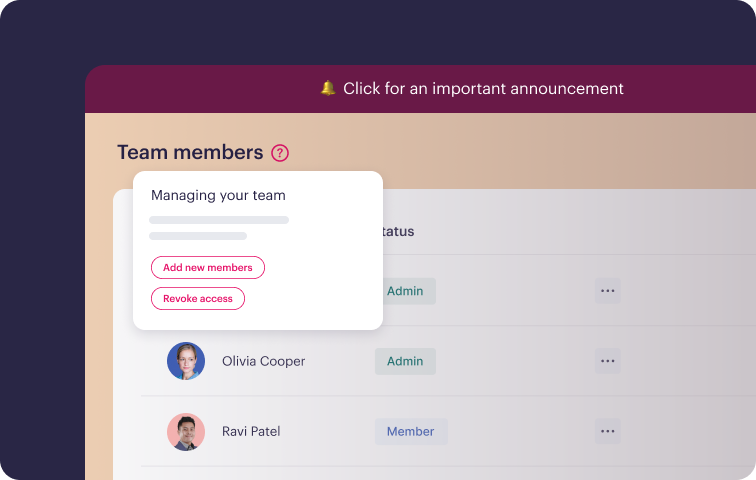
Stonly’s Widget puts your knowledge on your website, in your mobile app, and inside your help center. No-code triggers let you show a specific guide at a specific moment through popups, tooltips, and banners.
For connected products, the widget can walk owners through pairing and setup inside the companion app, where they’re most likely to get stuck. On the support site, it can surface the troubleshooting guide for the owner’s model before the owner reaches for a contact form. After a launch or the holidays, site-wide announcements and custom contact forms catch repetitive questions before they reach your team.
Analytics by Content, Step, and Rep
Stonly shows which content gets used, where owners drop off in a guide, which searches return nothing, and how individual reps use knowledge. When a setup step causes repeated drop-offs, your team can fix the content and share the pattern with product and engineering.
Security and Compliance
Stonly holds SOC 2 Type II certification and is GDPR and HIPAA compliant.
Consumer Product Customer Results
When Devialet prepared a firmware migration across its product line, the support team expected about 10,000 tickets. Instead, a single Stonly guide with separate paths and screenshots for each product type walked more than 10,000 customers through the update on their own. Devialet deflected more than 90% of the expected tickets and avoided over 9,000 in one month. Its support reps now use the same guides inside Zendesk as scripts for consistent troubleshooting.
“Stonly enabled nearly all of our customers to migrate to new software on their own without having to contact support, saving our team a ton of work!”- Sébastien Faure, Head of Customer Service, Devialet
Tonal saw a 62% lift in workflow adherence, a 90% overall QA score, and a 7% increase in agent CSAT with Stonly.
“We wouldn’t be able to live without Stonly. There are no other tools that have the same step-by-step guide capability combined with the ease of setup, AI features, and integrations available.”- Alex Arkhipov, Care Operations, Tonal
Pricing
Stonly offers custom pricing for small businesses and enterprise companies.
Request a demo to see how Stonly works for consumer product support teams.
Salesforce Knowledge
Best for: Large brands already running customer service on Salesforce Service Cloud.
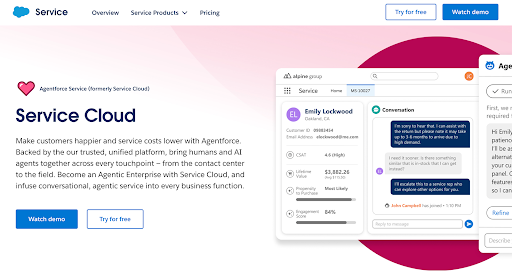
Salesforce Knowledge is the knowledge base inside Service Cloud. Articles live alongside cases, customer records, and product data in the CRM, and the same content feeds the customer-facing help center, the rep console, and Salesforce’s Agentforce AI agents. Salesforce also offers an Agentforce for Consumer Goods edition with AI agents for sales, key account management, retail execution, and customer service.
Key Features for Consumer Product Companies
- Knowledge connected to CRM data: Articles can be linked to cases, products, and assets, so reps see guidance next to the owner’s record and registered products.
- Data categories for filtering: Teams can organize and restrict articles by product line, region, or audience.
- AI built on the platform: Agentforce agents and rep-side AI draw on Knowledge content and other Salesforce data.
- Field service connection: Brands that dispatch repair technicians can use the same platform for field service.
Things to Consider
- Admin-heavy setup: Salesforce is highly configurable, and most teams need a dedicated admin or implementation partner to set up and maintain the knowledge base.
- Standard article format: Knowledge is built around articles, so branching troubleshooting and setup content usually requires custom flows or other Salesforce tools.
- Separate costs for AI: Core and Advanced plans include a set pool of Flex Credits for Agentforce, and teams buy more as usage grows, so AI costs grow with conversation volume.
Pricing
Service Cloud ranges from $25 to $550 per user per month, and most support teams need at least the Core edition at $195 per user per month, billed annually, since it’s the first tier with a self-service help center. Additional Agentforce credits are priced separately.
Freshdesk
Best for: Small and mid-size consumer brands that want an affordable help desk with a built-in knowledge base.
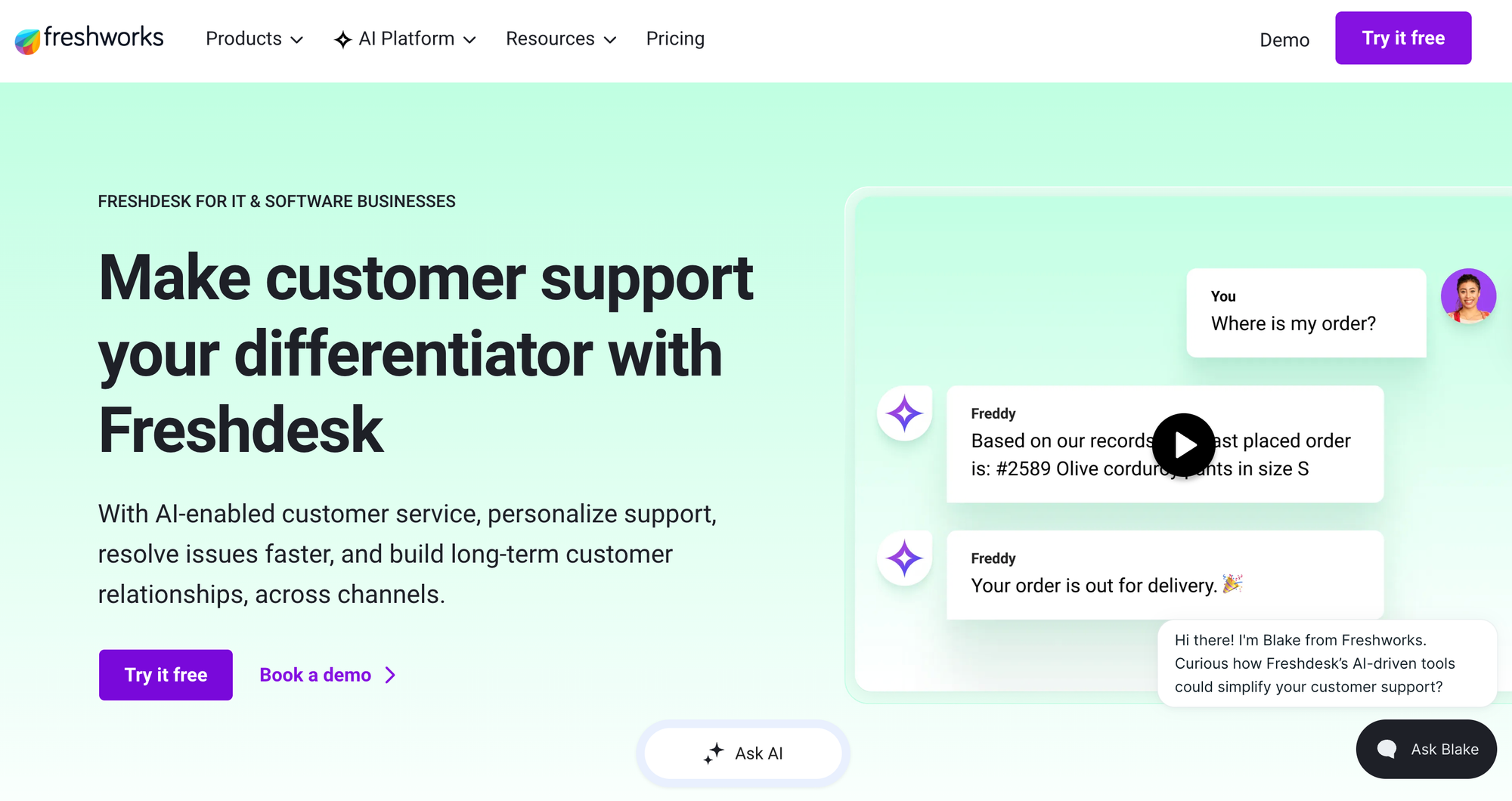
Freshdesk is the customer service help desk from Freshworks. Its knowledge base powers a customer-facing help portal and rep-side article suggestions, and it feeds Freddy AI, Freshworks’ set of AI tools for customers and reps.
Key Features for Consumer Product Companies
- Knowledge base included in every plan: Teams can launch a help center without buying a separate tool.
- Organization by product line: Reviewers point to article versioning, multilingual support, approval workflows, and a flexible folder hierarchy for organizing content by product line or region.
- Freddy AI for customers and reps: Freddy AI Agent answers customer questions from the knowledge base and hands off to a rep when needed, while Freddy AI Copilot suggests replies, summarizes tickets, and helps draft articles.
- Large app marketplace: Connects with e-commerce, CRM, and other tools through Freshworks’ marketplace.
Things to Consider
- Limited AI knowledge sources: Community feedback notes that Freddy can only train on Freshdesk’s own knowledge base, so product information in engineering documents, PDFs, or other tools may need to be migrated.
- Standard article format: Freshdesk is built around articles and folders, which are harder to apply to troubleshooting that branches by model and symptom.
- Key features sit on higher tiers: Multi-language knowledge base support requires the Pro plan, and AI tools are sold as add-ons.
Pricing
The Growth plan costs $19, Pro $55, and Enterprise is $89 per agent per month, billed annually. Freddy AI Copilot is an add-on at $29 per agent per month, and AI Agent usage is billed by session.
Kustomer
Best for: Direct-to-consumer brands that want a single customer timeline across every channel.
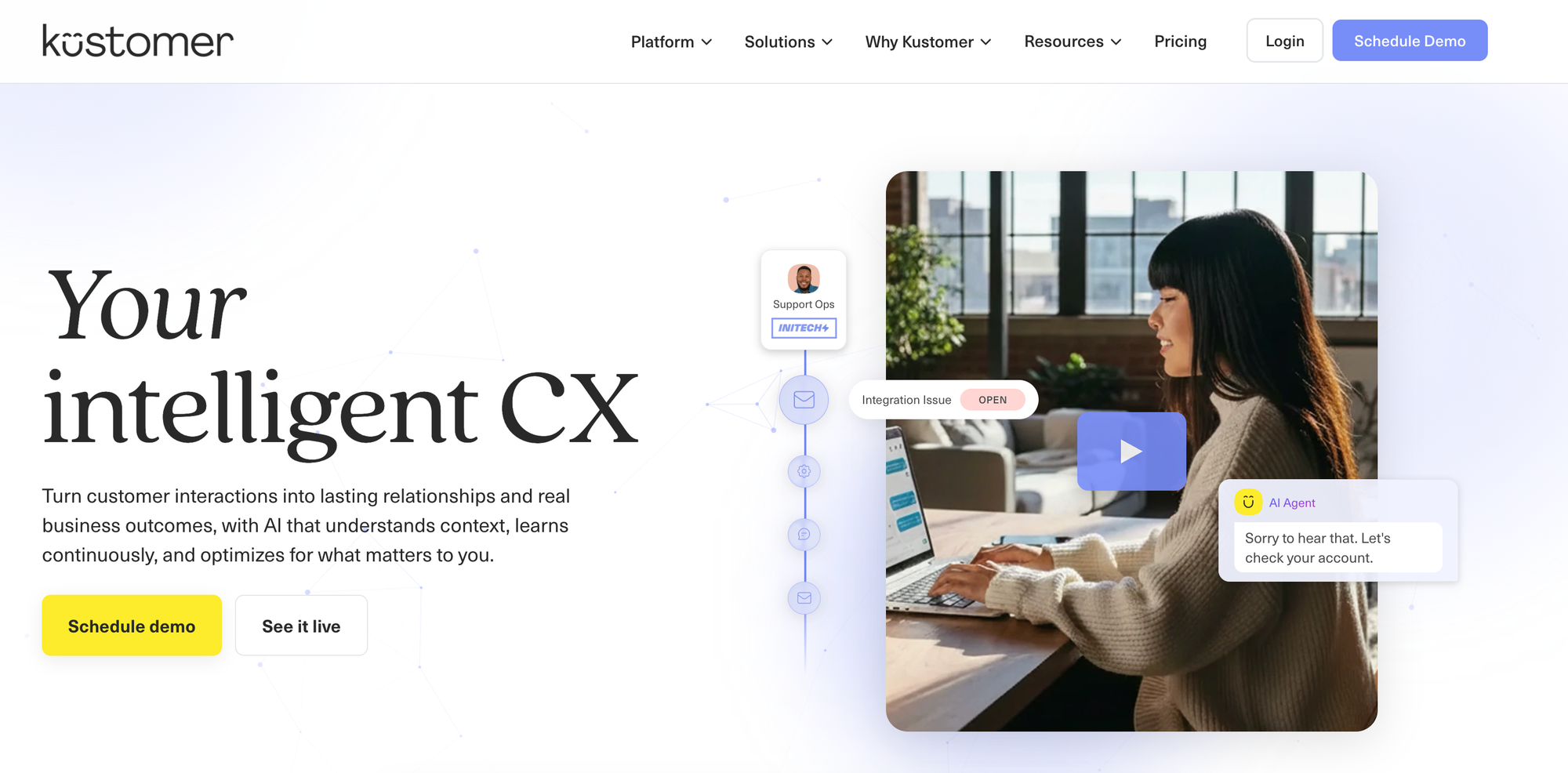
Kustomer is a customer service CRM that organizes every interaction into one timeline per customer. Its customers include consumer brands such as Vuori and Cotopaxi. The platform includes a knowledge base for self-service and rep reference, along with AI agents for customers and reps.
Key Features for Consumer Product Companies
- Unified customer timeline: Reps see every conversation, order, and interaction across email, chat, SMS, voice, and social in one view. When an owner writes in again about the same product, the rep sees the earlier conversations.
- AI for customers and reps: Kustomer offers AI agents that answer customers directly and AI tools that assist reps during conversations.
- AI knowledge base assistant: Kustomer offers an AI knowledge base assistant, included at no extra cost, meant to keep knowledge current for customers, AI agents, and human agents.
- Omnichannel support: Strong coverage of messaging channels like WhatsApp and Instagram, which DTC brands often rely on.
Things to Consider
- Knowledge base is a secondary feature: Some reviewers describe the knowledge base as feeling like an afterthought compared with the rest of the platform.
- Built around DTC commerce: Kustomer’s strengths center on orders and customer relationships. Brands that sell mainly through retail partners and handle mostly technical product support may get less value from the timeline.
- Setup effort: Implementation typically involves significant configuration and data migration planning, and customers report a learning curve for admins and reps.
Pricing
Kustomer pricing is quote-based, and its Enterprise and Ultimate plans no longer list a public per-user price. Kustomer lists its Concierge AI agent for customers at $0.75 per engaged conversation and its Envoy AI agent for reps at $50 per user per month.
Helpshift
Best for: Connected-product brands that want support inside their companion mobile app.
Helpshift is a customer service platform built for in-app support. Its SDK adds native help, FAQs, and messaging inside iOS and Android apps, so owners can get help without leaving the app they use to control their product. Helpshift is best known in mobile gaming, but its in-app approach also fits smart home, audio, and fitness brands whose products depend on an app.
Key Features for Consumer Product Companies
- Native in-app help: Owners can search FAQs and message support inside the companion app, where many setup and pairing problems happen.
- Automatic app and device context: The SDK automatically collects metadata such as app version, user profile attributes, and location and passes it to reps with each conversation.
- Bots and automation: Bots can guide users to knowledge base content and collect details before a ticket reaches a rep.
- Multilingual knowledge base: FAQs can be localized for global user bases.
Things to Consider
- Mobile-first focus: Helpshift is strongest inside apps. Brands that need a full web help center or detailed rep-side knowledge in another help desk may need additional tools.
- Gaming-centered roadmap: Helpshift’s top industries are computer games, banking, and IT, so features and examples focus less on hardware support.
- Standard FAQ format: Content is built around FAQs and articles, a format that struggles with multi-step troubleshooting.
Pricing
Helpshift has moved to custom pricing that requires a sales conversation for all plans. Pricing is based on interaction volume, the features a team turns on, and the regions and languages it supports.
Document360

Best for: Brands that need to publish and maintain product manuals and technical documentation.
Document360 is a knowledge base and documentation platform from Kovai. Teams use it to publish customer-facing help sites, product manuals, and internal documentation from one editor, with Eddy AI handling search and writing assistance.
Key Features for Consumer Product Companies
- Documentation-grade authoring: Version control and approval workflows suit teams that maintain manuals across many models and revisions.
- Auto-translation: Eddy AI includes auto-translation into 50+ languages, useful for brands selling in many countries.
- AI search and writing: Eddy AI answers reader questions with source-linked responses and helps writers draft and update articles.
- Help desk integrations: Connects with Zendesk, Intercom, and Freshdesk, so content can reach reps in the ticket view.
Things to Consider
- Built for documentation teams: Document360 is strongest for writing and publishing. Support-specific features like personalized content by customer data and action automation are more limited.
- AI answers stay within Document360: Eddy’s search answers come from Document360 content, and a separate chatbot add-on is needed to pull in other sources, with each bot limited to 40 MB of source content by default (more storage costs extra).
- AI usage is metered: Each AI search or chatbot question uses credits from an account-wide allowance, so costs can rise as self-service grows.
Pricing
Document360 removed its public pricing tiers and now provides quotes, with AI features priced as part of the package.
The Knowledge Platform for Faster Consumer Product Support
Stonly gives consumer product customer service teams one platform for rep and owner knowledge.
- Personalized knowledge: Show each owner and rep only the content that applies to their model, region, and purchase channel.
- AI answers and rep assistance: Accurate, source-linked answers for owners, Guided Answers for safety and warranty questions, Business Process Agents that resolve requests like warranty claims end to end, and a copilot for reps inside the help desk.
- Help where owners get stuck: Guides, tooltips, and banners on your support site and inside your companion app, deployed without code.
- Delivery where reps already work: Guidance inside the help desk, with context passed from self-service.
- Knowledge Agents: AI agents that monitor your knowledge, flag what’s outdated or missing, and draft updates for your team to review.
- Step-by-step guides and process automation: Walk reps and owners through setup, troubleshooting, and warranty claims, and take actions for them along the way.
- A team behind the platform: Product managers and CSMs who have helped more than 1,000 companies succeed with their knowledge.
Request a demo to see how consumer product brands use Stonly to cut ticket volume, get through post-holiday and launch spikes, and help more owners find answers on their own.