

Customer service teams adopting AI agents often start and stop with a customer-facing chatbot that answers questions. That covers one piece of the support operation, but it leaves several others untouched.
AI agents now handle tasks across the entire support function. Some monitor your knowledge base continuously to catch outdated or missing content before it causes problems. Others handle inbound phone calls, score every interaction for quality and compliance, guide agents through regulated conversations in real time, or forecast staffing needs for next week.
There's no shortage of AI agents to evaluate. But few teams have a clear picture of the agent type that addresses the specific issue hurting their metrics. A team with strong self-service but a messy knowledge base needs a different solution than a team drowning in unscored calls or inconsistent compliance. Buying a chatbot when you really need improved knowledge accuracy won't move the numbers you care about.
This article breaks down 10 AI agents across different customer service workflows so you can see which functions are covered, which aren't, and where the biggest opportunities are for your team.
How We Chose These Tools
The 10 tools here each handle a different aspect of support, from answering customers to forecasting staffing.
No single platform covers every function. Your team is better served by figuring out which part of your operation needs the most help, then picking the tool built for that job. Several of these tools cover multiple functions, and we categorized each one by its biggest strength.
Here's a quick overview of the tools and how they can help your customer service org.
10 AI Agents for Customer Service and the Workflows They Cover
| Primary AI Agent Function | Key Workflow It Covers | |
| Stonly | Four AI agents: Agent Copilot, AI Answers, Business Process Agents, Knowledge Agents | Automating ticket resolution, customer self-service, process execution, and knowledge maintenance |
| Sierra | Enterprise action-taking resolution | Complex customer transactions across back-end systems |
| PolyAI | Voice AI agents | Automating inbound phone calls with natural conversation |
| Observe.AI | Conversation intelligence and automated QA | Scoring 100% of interactions for quality and compliance |
| Balto | Real-time compliance guidance | Live compliance prompts and script adherence during calls |
| Assembled | AI workforce management | Demand forecasting, scheduling, blended workforce optimization |
| IFS Loops | Support operations analytics | Root cause detection, case intelligence, product feedback loops |
| Cognigy | Enterprise AI agent orchestration | Building and deploying AI agents across voice and digital channels |
| Sprinklr Service | Omnichannel social and messaging AI | AI-powered support across 30+ social and messaging channels |
| Dialpad | AI-native cloud contact center | Cloud contact center with built-in AI transcription, coaching, and routing |
Stonly: AI Agents That Keep Your Knowledge Accurate and Power Every Support Interaction
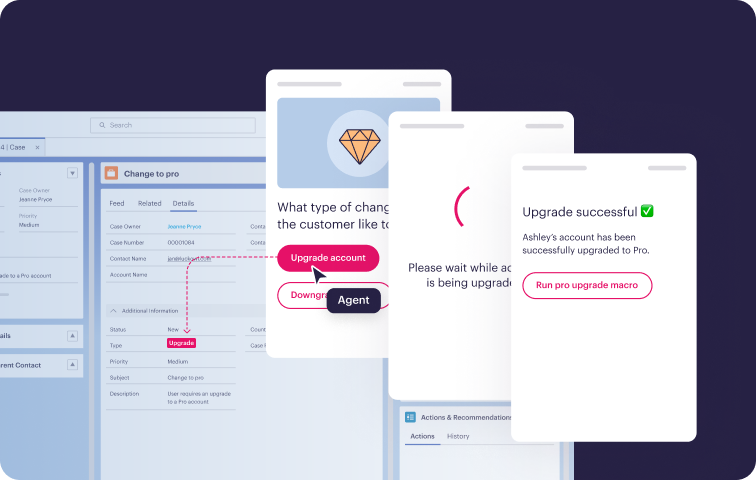
Stonly is an AI knowledge platform built for customer service, and its knowledge base software is the foundation for everything it does. Teams can create standard articles alongside interactive guides that walk through a process one step at a time. The same structured knowledge serves customers, support reps, and AI.
Stonly's AI agents draw on that foundation. Because the knowledge is structured as processes and not as long articles, the AI can follow a workflow the way a human rep would and avoid pulling from loosely related text. Everything runs inside the ticketing systems teams already use, including Zendesk, Salesforce, Freshdesk, and ServiceNow.
Key AI Agent Functionalities for Customer Service
- AI Agent Copilot: Agent Copilot reads an incoming ticket, finds the applicable workflow, and generates a ready-to-send reply grounded in the company's structured knowledge. This AI agent assist feature can also complete the resolution itself, including cases with conditional steps and policy requirements that often trip up retrieval-based tools. Because guides give it a defined process to follow, it handles complicated, variable issues reliably.
- AI Answers: AI Answers brings the same grounded approach to customer-facing search and chat. Customers get instant answers drawn from the knowledge base while they're in the help center or in-app chat. Accurate, process-aware help arrives without waiting for a rep.
- Knowledge Agents: Knowledge Agents monitor a company's knowledge continuously, scanning for duplicates, mistakes, outdated content, and gaps. They also check every incoming ticket, search, and policy change, so mismatches between documentation and reality surface as they happen, not months later in a quarterly audit. The agents then draft updates that follow company guidelines for the team to review and publish. Teams can also manage knowledge conversationally. Analytics show which articles have the lowest completion rates and which topics still generate tickets despite having documentation.
- Business Process Agents: These custom AI agents follow a team's exact support processes to resolve complex, time-consuming tickets from beginning to end. Over email, chat, and WhatsApp, Business Process Agents (BPAs) gather what a case needs and guide customers to a fully automated resolution. Most AI agents need heavy prompt engineering to handle branching processes. BPAs run the same guides a team already builds for its reps, so there's no separate AI workflow to maintain. Inside the ticketing system, review and approve while the agent handles the manual steps.
- A Connected System: The four agent types feed each other. When Agent Copilot or a BPA hits a knowledge gap, Knowledge Agents detect and flag it. When Knowledge Agents update content, the improvement immediately flows through to every other agent.
Best For
Stonly is best for high-volume customer service teams that want AI grounded in interactive, process-driven knowledge for both reps and customers, with deep help desk integrations and analytics tied to support outcomes. It's an especially strong fit where support processes are complex and variable, and where teams want AI that handles that complexity using the team's existing process documentation.
Things to Consider
Stonly's Knowledge Agents deliver the most value when a team commits to an active knowledge management practice. The agents find the issues and draft the updates, but someone still needs to review and publish. Teams that aren't ready to treat knowledge as an operational priority will get less from the platform.
Pricing
Custom pricing. Request a demo to discuss your team's needs.
Sierra: Outcome-Based AI Agent for High-Stakes Customer Transactions
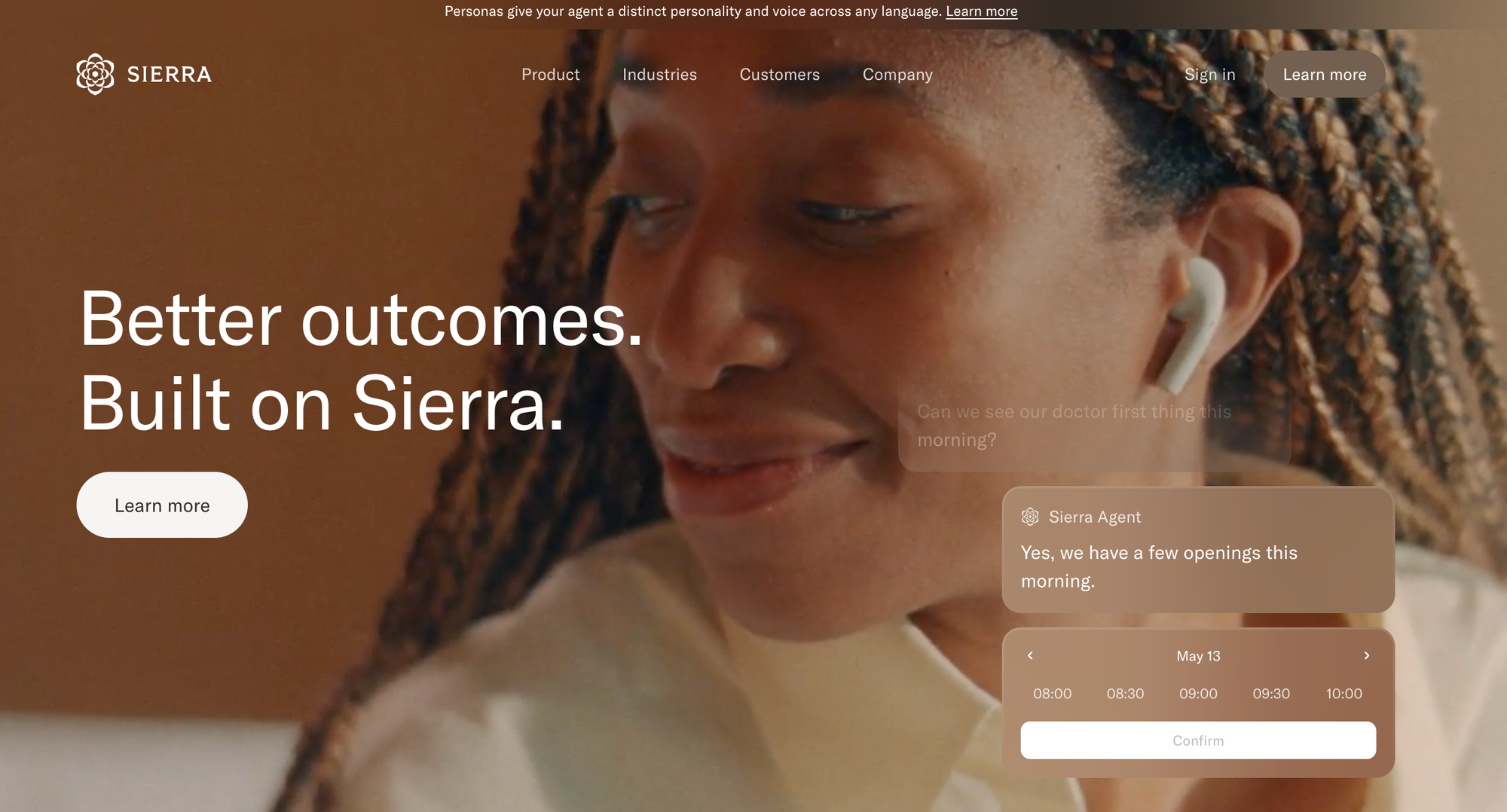
Sierra is an enterprise platform for building AI agents that resolve customer issues from start to finish. Its agents plug into a company's internal systems and complete the job themselves. An agent can issue a refund, cancel a subscription, or update an order without a human touching the ticket.
A single agent can run on multiple support channels. Agents work in 50+ languages and can change languages partway through a conversation.
Key AI Agent Functionalities for Customer Service
- Voice Agents: Voice agents handle calls through natural conversation and pass the call to a human rep, along with the conversation history, when a person is needed. They can also take payments by phone. Card details travel through separate Payment Card Industry (PCI) certified infrastructure and stay out of the main platform.
- Channel Coverage: One agent covers voice, email, WhatsApp, Apple Business Chat, and chat on a company's website or mobile app. Agents can also send outbound messages and add images or video to their replies.
- Response Oversight: A second layer of AI checks each reply for accuracy and policy compliance before it reaches the customer, and it pulls in a human when a conversation goes off track. Teams can also set hard rules for cases where they don't want the agent to improvise.
- Agent Building: Teams create or update agents by describing what they want in plain language, or by uploading existing material like standard operating procedures. Sierra turns that input into a working agent, including its rules and tone of voice, without any coding.
- Back-End Actions: Agents connect to a company's order management, billing, and customer relationship management (CRM) systems. Sierra offers more than 40 ready-made integrations plus a framework for connecting proprietary tools, so agents can complete multi-step tasks like returns and cancellations in a single interaction.
Best For
Sierra is best for large enterprises that want AI to handle transactional support requests (returns, cancellations, and billing changes) from start to finish. The platform is designed for complex use cases in industries like financial services, telecom, healthcare, and retail.
Things to Consider
Sierra has no self-serve option. Customers work with Sierra's team to build and launch their agents, which suits enterprises but not smaller teams that want a plug-and-play product. The platform also focuses on customer experience alone, so functions like workforce management fall outside its scope.
Pricing
Outcome-based model with enterprise quotes only.
PolyAI: Voice AI Agents That Handle Inbound Calls Like a Human
PolyAI is a voice-first platform for building AI agents that answer customer phone calls. The company develops its own speech and language models specifically for real-world call conditions.
Teams can build agents in two ways. A no-code builder turns a plain language description into a working voice agent, and a developer kit lets engineers build agents in code. Guardrails and compliance certifications are built in, and teams can see the reasoning behind each decision an agent makes.
Key AI Agent Functionalities for Customer Service
- Call Handling: Agents answer inbound calls and take care of routine requests like reservations, billing questions, and order updates. They can verify a caller's identity, route calls, and pass the conversation to a human rep along with a summary of what's been said so far.
- Proprietary Models: PolyAI runs on its own language model, trained on more than 1 billion enterprise conversations, and its own speech recognition. Its voices blend human recordings with synthetic speech, so agents sound conversational and human.
- Natural Conversation: Agents keep track of context through interruptions and abrupt topic changes, and they understand callers through heavy accents or noisy lines. They also recognize when a request is beyond them and a human should take over.
- Language Flexibility: Agents speak multiple languages and can switch languages in the middle of a call. Callers can even reply by text during a voice conversation, and chat is available alongside voice.
- Conversation Analytics: Dashboards track call containment, handle time, and other performance metrics. Teams can also query their conversation data in plain language, for example to find the most common reasons customers called about a topic last quarter.
Best For
PolyAI is best for contact centers where customers typically access help over the phone, such as in hospitality, healthcare, financial services, and utilities. It suits teams that want to automate routine calls while keeping humans on the complicated ones.
Things to Consider
PolyAI started as a voice-only platform and voice remains its primary strength, though it has since expanded to include chat and SMS through its Agentic Dialog Platform. Teams whose support volume runs mostly through email will still use only a slice of it. Analytics also center on the AI agent's own calls rather than on scoring human agents, so teams that also need quality scoring for human agents should pair it with a dedicated QA tool.
Pricing
PolyAI's enterprise deployments use custom, usage-based pricing billed per minute through annual contracts.
Observe.AI: Conversation Intelligence and Automated QA Across Every Interaction
Observe.AI is a contact center platform organized around three groups of AI agents. One group handles customer conversations directly over voice and chat. Another assists human reps in real time, and a third evaluates interactions and coaches the team.
The three groups run on a single platform and share the same conversation data. Teams can author agents in plain language, so building and adjusting them doesn't require engineering resources.
Key AI Agent Functionalities for Customer Service
- Customer-Facing Agents: Agents resolve customer requests over voice and chat, including multistep ones that involve billing, scheduling, and CRM systems. They enforce required steps like caller authentication, and the agents handle both inbound and outbound conversations.
- Real-Time Guidance: Before a call starts, human reps see the caller's history, identity status, and likely reason for calling. During the call, the AI listens and offers relevant knowledge, checklists, and compliance reminders that adjust as the conversation moves.
- After-Call Automation: Once a call ends, the AI writes the summary, classifies the outcome, and updates the CRM. Wrap-up that used to take minutes per call shrinks to almost nothing.
- Interaction Scoring: The platform evaluates every interaction against consistent criteria, covering both human reps and the AI agents themselves. Risky conversations get flagged for review.
- Coaching and Insights: The platform turns scored conversations into coaching for individual reps and delivers it automatically. It also detects patterns across interactions and traces recurring problems back to their causes.
Best For
Observe.AI is best for contact centers that want to automate routine calls and improve the quality of the calls humans still handle, all in one platform. It's designed for regulated industries such as banking, healthcare, and insurance, where interactions need consistent quality and compliance review.
Things to Consider
Observe.AI covers a lot of ground. Teams that only need one function, like a standalone chatbot, will end up buying more platform than they use. The customer-facing agents cover voice and chat, so teams whose support runs mostly through email and social channels are a weaker fit.
Pricing
Custom quotes based on team size and scope.
Balto: Real-Time AI Compliance Guidance During Live Calls
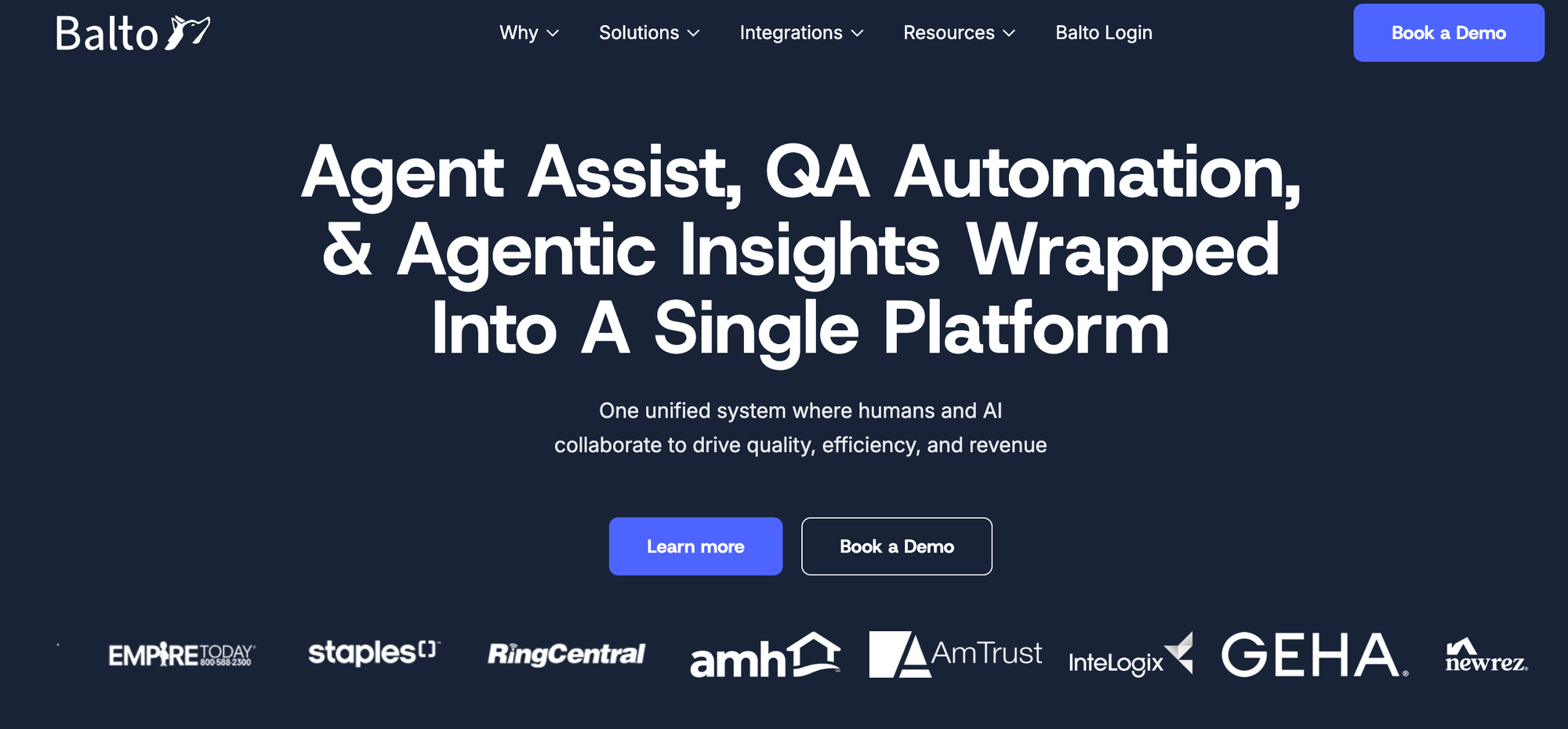
Balto is a contact center AI platform that helps reps in real time during support calls. It listens to the conversation, shows the rep guidance on their screen, and flags compliance risks as they happen.
It connects to the major contact center platforms, so it runs on the phone system the organization already uses. It handles 20+ languages and also includes a voice AI agent that can take repetitive calls itself.
Key AI Agent Functionalities for Customer Service
- Real-Time Guidance: During live calls, reps see prompts, checklists, and answers that come from the company's own knowledge content. The guidance adjusts to the conversation as it unfolds, so reps can follow the required steps without sounding scripted.
- Live Compliance Monitoring: Every interaction gets reviewed in real time, so risks get flagged while the call is still happening and supervisors can step in before a problem escalates. Balto keeps a full audit trail and removes sensitive details, like Social Security numbers, from records as it goes.
- Automated Quality Scoring: The platform scores every interaction with AI, giving managers a complete picture of performance across the full volume.
- AI-Assisted Coaching: Balto uses its conversation scores to flag which reps need coaching, then pulls up the conversations worth reviewing and connects behaviors to outcomes. Managers spend less time preparing for coaching sessions.
- Voice AI Agents: A built-in voice agent handles repetitive call types, like booking appointments, checking on orders, and verifying accounts. Human reps can stay available for the calls that need judgment.
Best For
Balto is best for contact centers in regulated industries, such as insurance, banking, healthcare, and collections, where reps must follow strict rules about what they say on a call. It's also useful for teams with frequent new hires, since reps get on-screen guidance from their first day.
Things to Consider
It requires a compatible contact center platform, so check that yours is supported before evaluating. Balto's job is the live conversation itself, so teams that handle most of their support through email will get less from it.
Pricing
Custom pricing.
Assembled: AI-Powered Workforce Management and Demand Forecasting
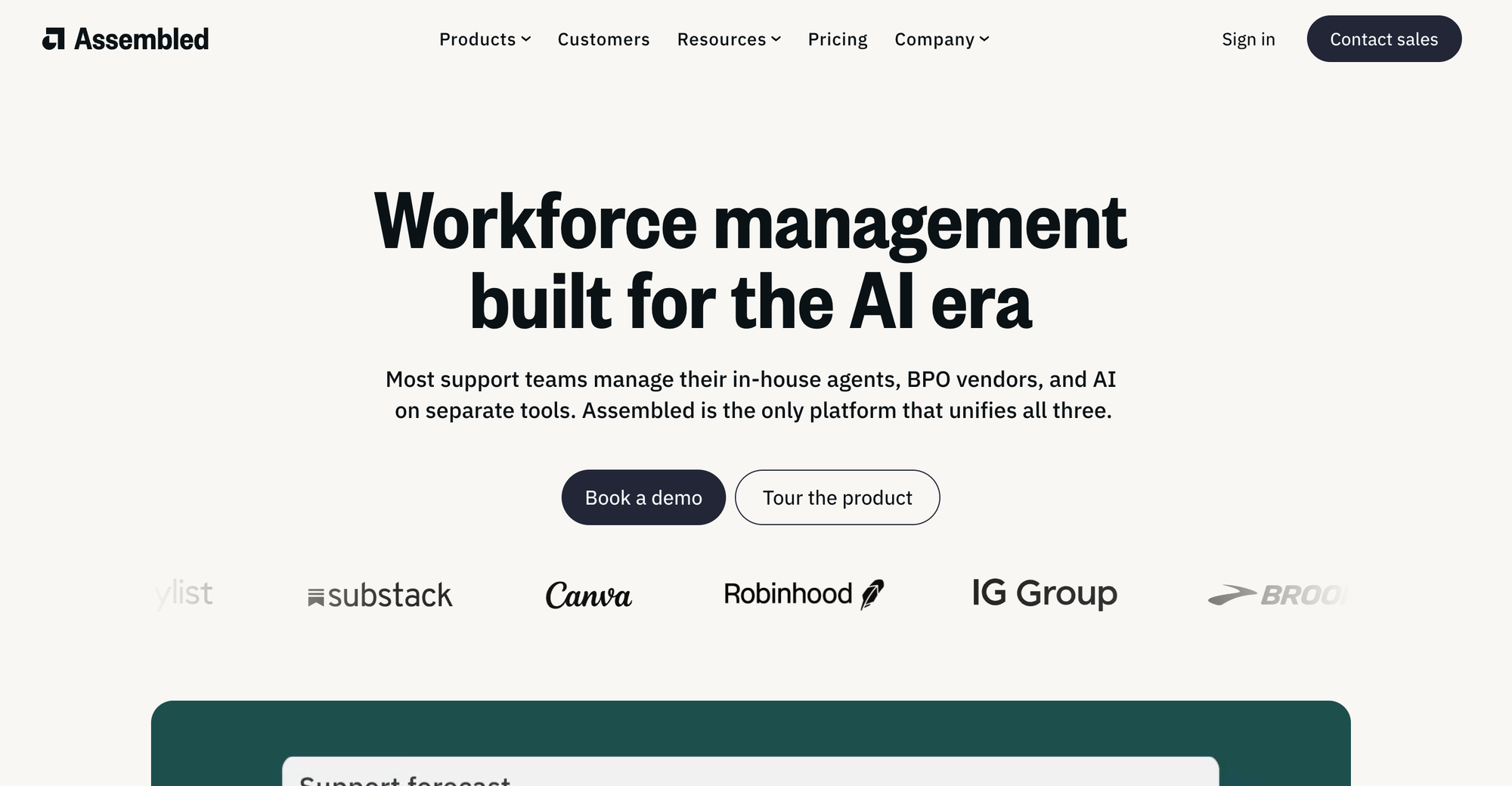
Assembled is a workforce management platform for customer support teams. It forecasts how much support volume is coming, builds schedules to cover it, and tracks whether coverage holds during the day.
It manages in-house reps, outsourced teams, and AI agents in one system, so staffing plans cover all three. The platform also includes its own customer-facing AI agents and a copilot that assists human reps.
Key AI Agent Functionalities for Customer Service
- Demand Forecasting: Machine learning models predict support volume by channel and queue, accounting for patterns like seasonal spikes and marketing campaigns. Forecasts include AI agent capacity, so managers can see how much volume AI will absorb and staff humans for the rest.
- Automated Scheduling: Assembled generates schedules from the rules and constraints a team sets. Reps can swap shifts, get routine time-off requests approved automatically, and pick up extra hours. Built-in checks make sure schedules respect rules for breaks, overtime, and shift length.
- Real-Time Monitoring: Dashboards compare forecasts to what's happening now, and alerts go out through Slack or email when reps fall out of adherence. Managers can track human and AI agent performance side by side and adjust staffing during the day.
- Vendor Management: Teams plan headcount with their outsourcing partners, sync schedules from the partners' own systems, and validate invoices against logged time. Teams get the same visibility into outsourced reps as in-house ones.
- AI Agents and Copilot: Assembled's own AI agents resolve customer issues on chat, email, text messages, and voice, and they follow company policies while taking action in the systems a team already uses. A copilot assists human reps with suggested responses, relevant knowledge, and automatic translation.
Best For
Assembled is best for support teams that manage staffing across several groups at once, such as an in-house team, one or more outsourcing partners, and AI agents. It's also useful for operations leaders who want one view of how humans and AI split the workload.
Things to Consider
Most of the platform is aimed at workforce managers and operations leads rather than individual reps. Small teams without a formal scheduling process may not need its core forecasting and scheduling functions.
Pricing
Custom pricing.
IFS Loops: AI-Powered Analytics for Root Cause Detection and Product Feedback
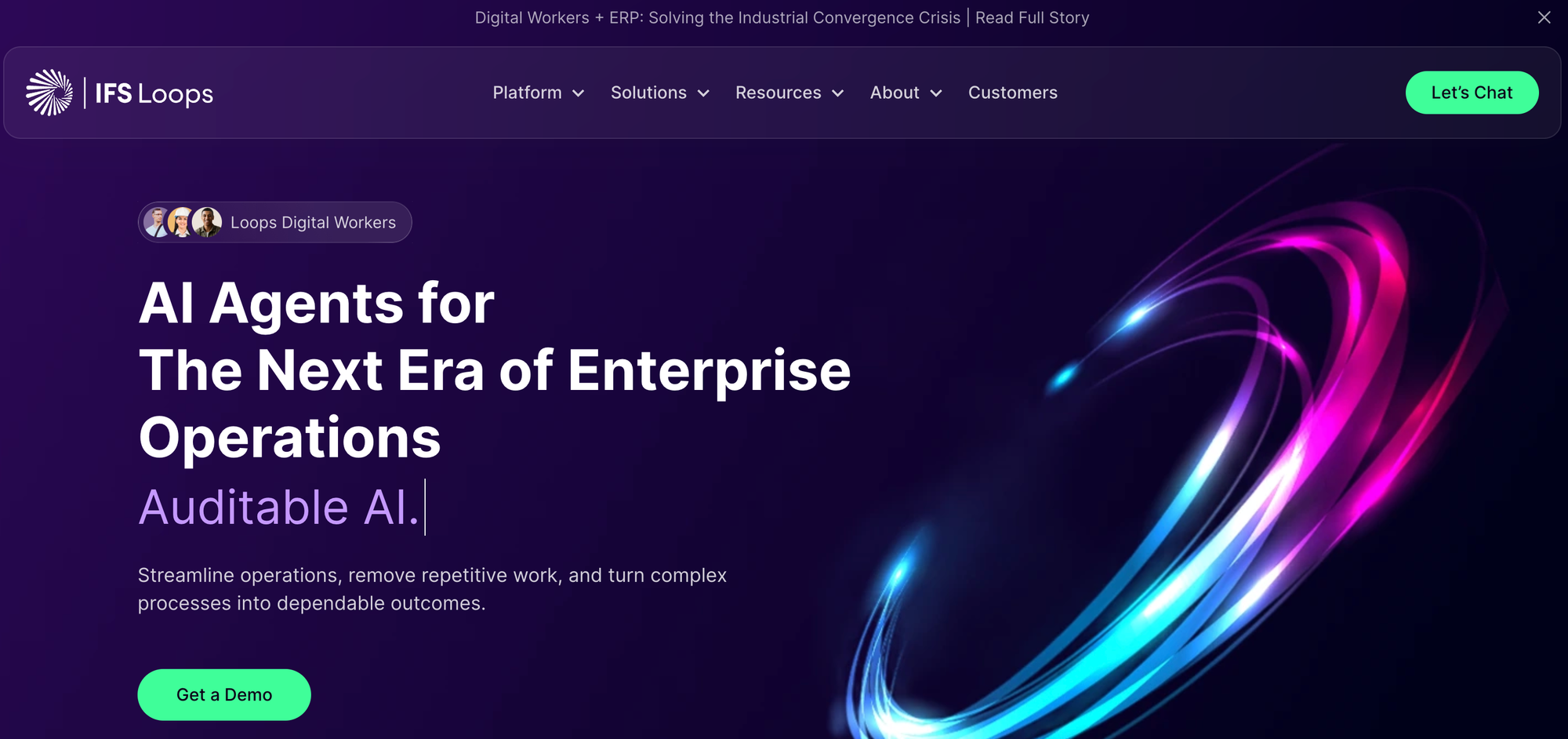
IFS Loops is an AI agent platform for customer service and other enterprise operations. For support teams, it connects to the help desk, CRM, knowledge base, and other tools a team already uses.
That connected data powers AI agents for analysis, rep assistance, quality review, and self-service. Every agent action is tracked and auditable, and teams decide which actions need human approval.
Key AI Agent Functionalities for Customer Service
- Support Analytics: Leaders can ask questions of their connected ticket and account data and get direct answers. Analytics show where cases stall between opening and resolution and what's behind the slowdowns, with each issue viewed in the context of the whole customer account rather than a single ticket.
- Cross-System Data: The platform supports 65+ connectors, including Zendesk, Salesforce, Jira, Intercom, and ServiceNow. Pulling these sources together gives support, product, and operations teams one shared view of what customers are experiencing.
- Agent Copilot: Reps get help inside their existing workspace, with context and recommended actions for resolving complex cases. Guidance comes from the same connected data that powers the analytics.
- Automated Quality Review: Every interaction gets evaluated, covering both human reps and bots. Managers get coaching guidance and predicted satisfaction scores without manually sampling conversations.
- Self-Service and Knowledge: A self-service agent resolves customer issues by drawing on past cases and what the platform knows about the customer, and it escalates to a human when needed. The platform also detects knowledge gaps and drafts articles as cases close, giving the team pre-written content to review and publish.
Best For
IFS Loops is best for support leaders who want to understand what's driving their ticket volume and where their operation slows down, using data that's already in their systems. It also fits teams that want their support data to inform decisions in product and operations as well as in support.
Things to Consider
Customer service is now one part of a much larger enterprise platform, so support teams are buying into a product whose roadmap extends well beyond their function. The platform connects to a team's existing help desk and works alongside it, so a ticketing system needs to be in place first.
Pricing
Custom pricing.
NiCE Cognigy: Enterprise Platform for Building and Deploying AI Agents Across Channels
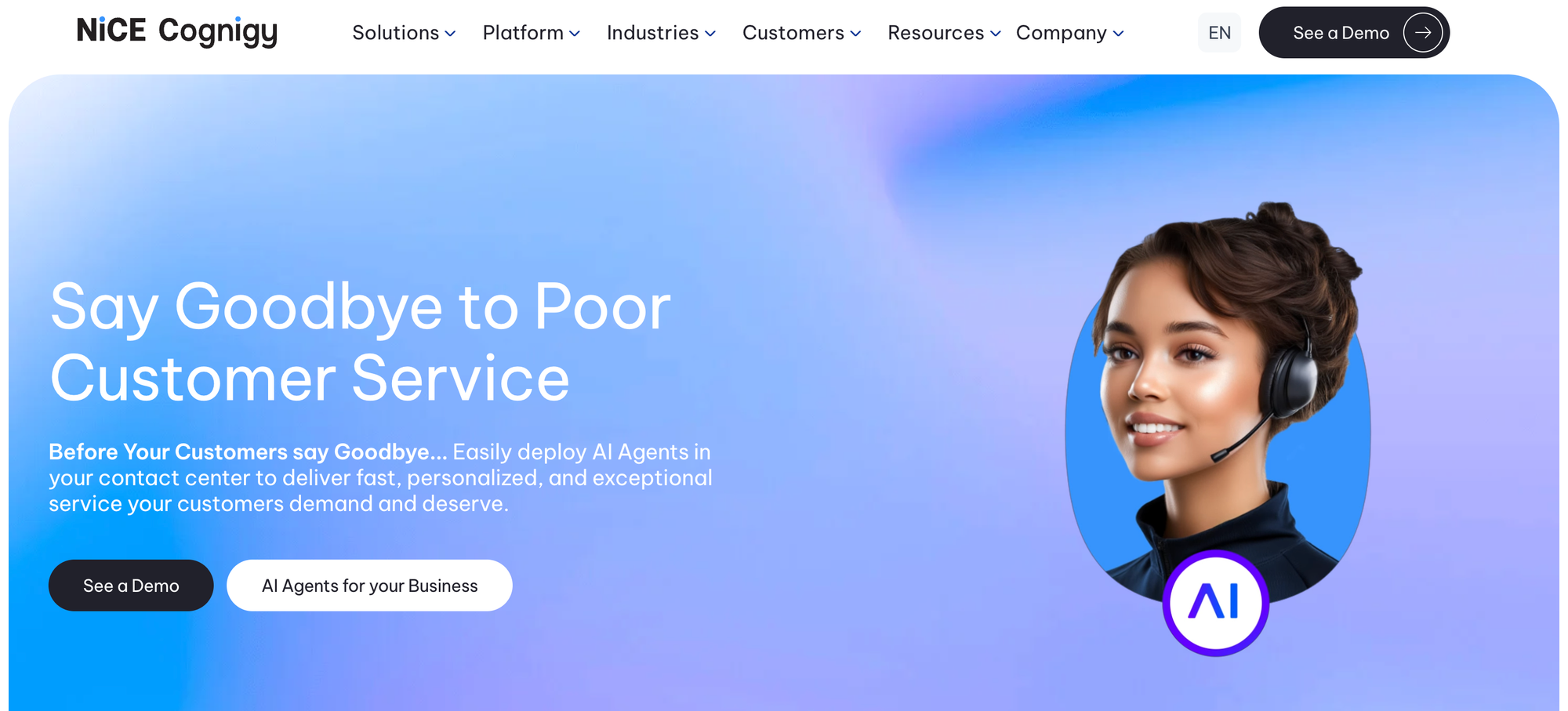
Cognigy is an enterprise platform for building customer service AI agents. Acquired by NICE (NiCE) in September 2025, Cognigy now operates as NiCE Cognigy and is part of the NiCE CXone platform. It gives contact centers the tools to create, run, and manage their own agents.
Agents built on the platform run on the phone and on more than 30 digital channels, in 100+ languages. Cognigy also connects to major contact center platforms, so teams can add AI to the systems they already run.
Key AI Agent Functionalities for Customer Service
- Agent Building: Teams create agents by writing a plain language description of the agent's persona, behavior, and job, then attaching the knowledge and tools it can use. Agents can pull answers from a company's own documents and knowledge bases.
- Conversation Control: Cognigy lets teams mix fixed, rule-based conversation steps with open-ended AI conversation in the same agent. Steps that must happen a set way, like a required compliance disclosure, stay scripted, while the rest of the conversation adapts to the customer.
- Customer Memory: Agents keep short-term and long-term memory and can draw on CRM data, so they remember preferences and past interactions. A returning customer can pick up where they left off, with past context already loaded.
- Model Choice: Teams can use large language models (LLMs) from several vendors, including OpenAI, Anthropic, Google, and AWS, and pick which model handles which job. When a better model comes out, they can switch without rebuilding the agent.
- Rep Assist: A copilot supports human reps on voice and chat with real-time guidance, relevant knowledge, and automated wrap-ups. It also translates conversations in real time, so reps can help customers in languages they don't speak.
Best For
Cognigy is best for large contact centers that want to build their own AI agents and run them across many channels and languages. It also fits teams adding AI to an existing contact center platform as a layer on top.
Things to Consider
Cognigy is a platform rather than a finished product, so someone on the team has to design, test, and maintain the agents. Since the NICE acquisition, Cognigy is being integrated into the CXone Mpower suite. Teams evaluating it should consider whether they want a standalone deployment or the broader NiCE ecosystem. It's also aimed at enterprise contact centers, and small teams looking for something simple to switch on will find it more than they need.
Pricing
Subscription-based, tiered by usage volume. Enterprise quotes only.
Sprinklr Service: AI-Powered Support Across 30+ Social and Messaging Channels
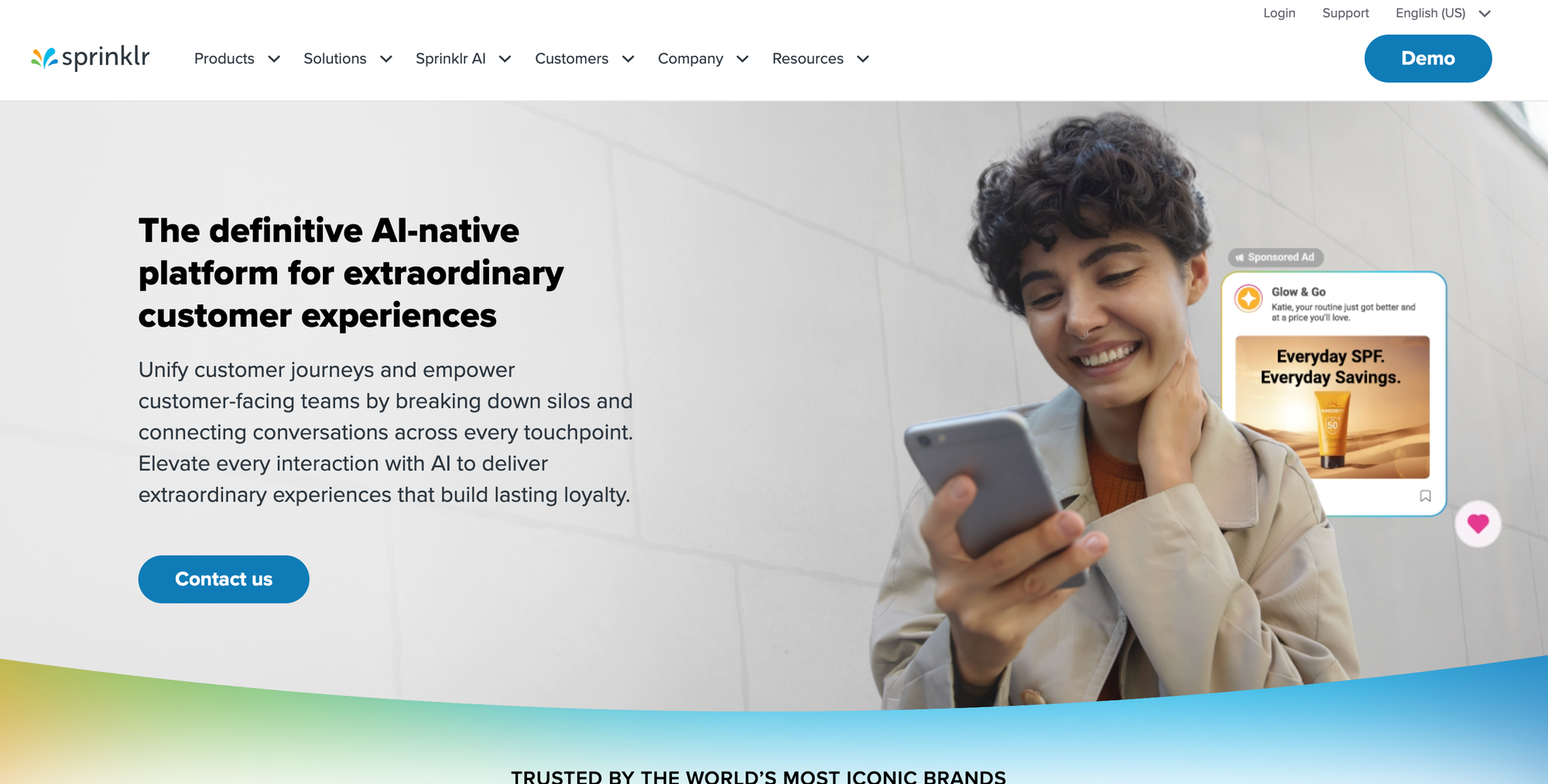
Sprinklr Service is a contact center platform for support that spans many channels at once. It covers more than 30 voice, social, and digital channels, and reps can handle all of them from one desktop.
Conversations keep their context as customers move between channels, so people don't have to start over when they switch from one to another. The platform is part of Sprinklr's larger customer experience suite, which also covers social media management, marketing, and consumer research.
Key AI Agent Functionalities for Customer Service
- Channel Coverage: Support runs across voice, chat, email, messaging apps, and more than 25 social networks. A customer can start on one channel and continue on another, and the rep sees the whole conversation in one place.
- AI Agents: Sprinklr's AI agents resolve routine issues on digital, social, and voice channels, handing the conversation to a human, with full context, when a case gets complicated. Teams build them from their own historical cases and business rules, and the agents keep improving by learning from how humans resolve escalated issues.
- Smart Routing: Incoming queries get classified by intent, urgency, and sentiment. Critical or frustrated-customer cases get priority and reach the rep best suited to handle them.
- Rep Copilot: During conversations, reps get suggested replies, case summaries, and relevant knowledge articles. The copilot also completes post-conversation tasks, so reps can move to the next case sooner.
- Quality and Analytics: The platform evaluates every interaction for performance and compliance and turns the results into coaching for individual reps. It also analyzes all conversations for trends, sentiment, and recurring problems, with a live view of contact center metrics for operations leaders.
Best For
Sprinklr Service is best for large consumer brands whose customers reach out on social media and messaging apps as often as by phone or email, in industries like retail, telecom, travel, and financial services. It fits teams that want one platform to see and answer all of those conversations.
Things to Consider
Sprinklr Service is one part of a broad customer experience suite, so teams that only need a support tool are evaluating a much bigger platform. Its strengths are also social and digital channels, with voice sold as an add-on. Contact centers that get most of their volume by phone should compare it against the voice-first tools in this list.
Pricing
Custom enterprise pricing.
Dialpad: AI-Native Cloud Contact Center with Built-In Transcription and Coaching
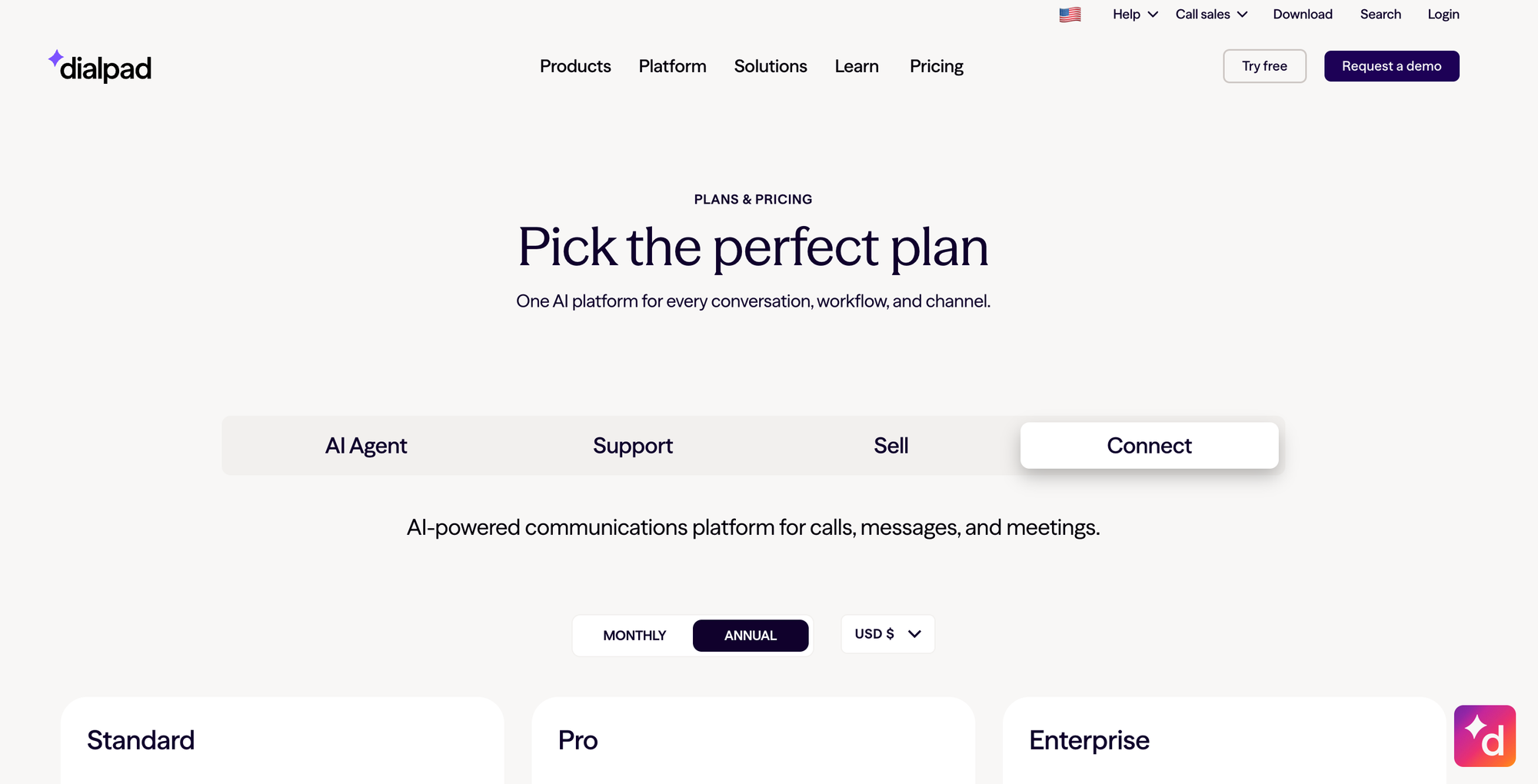
Dialpad is a cloud contact center and business communications platform with AI built in rather than added on. The same product covers the phone system, the support queue, and the AI that assists on every call.
Dialpad also sells AI agents that talk to customers directly on voice and digital channels. Teams can sign up and try the platform on their own, without going through a sales process first.
Key AI Agent Functionalities for Customer Service
- Transcription and Summaries: Calls get transcribed in real time, and each interaction ends with an automatic summary. Post-call steps get automated too, so reps spend less time on documentation between conversations.
- Live Coaching: During a call, cards appear on the rep's screen with knowledge base answers and response suggestions that match where the conversation is going. Reps get what they need without searching or asking a supervisor.
- Satisfaction Scoring: AI predicts a satisfaction score for every call and analyzes customer sentiment as conversations happen. Managers can measure satisfaction across all interactions rather than only the ones where a customer fills out a survey, and scorecards evaluate calls against the team's criteria.
- AI Agents: Dialpad's AI agents handle high-volume interactions on their own, taking actions like processing refunds and scheduling appointments in connected systems. When a case needs a person, the agent passes it over with the conversation context intact.
- Platform Consolidation: Dialpad combines the business phone system, contact center, and AI tools in one product. It also syncs with major CRM and help desk tools, so customer data stays consistent across systems.
Best For
Dialpad is best for support teams that want their phone system, contact center, and AI tools in one platform instead of buying and connecting separate products. The self-serve trial also makes it one of the easier tools in this list to evaluate hands-on.
Things to Consider
Dialpad is a communications platform, so adopting it means running your calls through it rather than adding it to an existing phone system. Its AI agents are also a separate product from the core contact center, so teams evaluating both should scope them together.
Pricing
Dialpad Support starts at $80/user/month. AI Agents are priced separately on a conversation basis.
How the 10 AI Agents for Customer Service Compare
| Primary Function | Who Uses It Daily | Setup Complexity | Best for Team Size | |
| Stonly | Four AI agents: Agent Copilot, AI Answers, Business Process Agents, Knowledge Agents | Knowledge managers, support reps, customers | Moderate | Any |
| Sierra | Enterprise action-taking resolution | Customers (autonomous) | High | Enterprise |
| PolyAI | Voice AI agents | Customers (voice) | Moderate | High call volume teams |
| Observe.AI | Conversation intelligence + QA | Reps, QA managers, ops | Moderate-High | Mid-market to enterprise |
| Balto | Real-time compliance guidance | Reps (during calls), supervisors | Moderate | Mid-market to enterprise |
| Assembled | Workforce management | Workforce managers, ops | Moderate-High | Mid-market to enterprise |
| IFS Loops | Support ops analytics | CX leaders, ops, reps | Moderate | Mid-market to enterprise |
| Cognigy | AI agent orchestration | CX teams, developers | High | Enterprise |
| Sprinklr Service | Omnichannel social/messaging AI | Reps, social teams | High | Enterprise |
| Dialpad | AI-native contact center | Reps, managers | Low-Moderate | Any (self-serve trial) |
Choose the Right AI Agent for Your Team's Biggest Gap
Choose Stonly If... Your biggest challenge is knowledge quality rather than conversation automation. If your AI tools hallucinate, your reps give inconsistent answers, or your knowledge base falls behind every product update, the fix starts with the knowledge itself.
Stonly is the only platform in this list that uses AI agents to monitor, maintain, and improve the knowledge that every other tool depends on. It also covers the copilot and process automation layers, so teams that need both the knowledge foundation and the agents that act on it can get both from one platform. Learn more about Stonly’s AI Knowledge Agents here.
Choose Sierra If... You operate at Fortune 500 scale and need an AI agent that connects directly into complex legacy back-end systems, like billing, order management, and loyalty programs, that many platforms struggle to integrate with.
Choose PolyAI If... Your contact center is voice-heavy and you need AI that handles inbound calls with human-like conversation quality. PolyAI's proprietary voice models are designed specifically for this, unlike platforms where voice is an add-on to a text-first product.
Choose Observe.AI If... You need automated QA coverage across every interaction rather than a random sample. Observe.AI puts voice AI agents for routine calls and 100% automated quality scoring and coaching in a single platform, covering both the automation and oversight layers.
Choose Balto If... Your team operates in a regulated industry and compliance during live calls is non-negotiable. Balto helps reps during the call rather than after it ends. No other tool in this list provides real-time compliance prompts and script guidance while the conversation is happening.
Choose Assembled If... You manage a blended workforce of in-house reps, outsourced teams, and AI agents, and you need to forecast demand and optimize scheduling. Assembled focuses on the workforce planning layer, determining whether your mix of people and AI matches demand on any given day. The other tools on this list leave that function to separate systems.
Choose IFS Loops If... Your support data is siloed and leadership doesn't have visibility into what's driving ticket volume. IFS Loops is a tool for leaders more than for reps. It helps them understand root causes and build a feedback loop between support and product.
Choose Cognigy If... You need to build custom AI agents that deploy across both voice and digital channels and integrate with an existing enterprise contact center stack. Cognigy is an orchestration platform rather than a pre-built agent. It's for teams with technical resources that want to own and customize the AI experience.
Choose Sprinklr Service If... Much of your customer service happens on social media and messaging channels. Sprinklr covers more than 30 channels, and no other tool in this list matches its breadth for social and messaging support at that volume.
Choose Dialpad If... You're a mid-market team that wants an AI-native contact center with everything built in, without the complexity and cost of enterprise platforms. Dialpad is the most accessible entry point for teams consolidating phone, chat, and coaching into a single AI-native platform.